

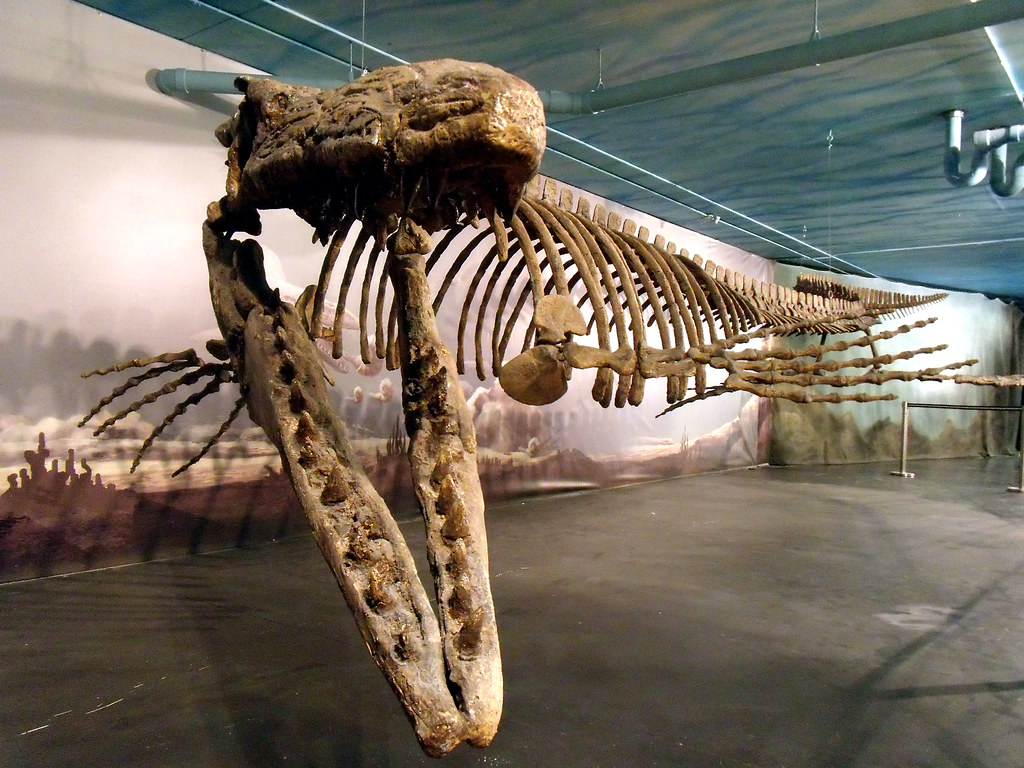
The jaw fossil discovery is a groundbreaking find that challenges long-held ideas about early hominins. This 2.6-million-year-old fossil offers new insights into our evolutionary history.
Understanding the significance of the jaw fossil
The recent jaw fossil discovery has provided profound insights into the evolution of early hominins, challenging previously held beliefs about their development. This 2.6-million-year-old fossil suggests that the lineage of modern humans may be more complex than initially thought.
Research indicates that this jaw belonged to an early hominin species that lived alongside other well-known species, such as Australopithecus and early Homo species. The fossil’s unique features raise questions about the morphological variations within early populations.
Key findings from the analysis of the jaw include:
- Dental structure: The arrangement and size of the teeth indicate a diverse diet, which could have contributed to the survival and adaptation of these early humans.
- Comparative anatomy: The jaw exhibits characteristics that differ from previously identified fossils, leading researchers to reconsider evolutionary trees.
- Geological context: The age and location of the fossil provide crucial information about the environment in which these early hominins lived.
This jaw fossil discovery not only adds a significant piece to the puzzle of human evolution but also inspires further exploration into the complex history of our ancestors.
How this discovery reshapes human evolution
The recent jaw fossil discovery, dating back 2.6 million years, has profound implications for our understanding of human evolution. This remarkable find challenges long-held ideas about the timeline and characteristics of early hominins.
Researchers are now reevaluating the migration patterns and adaptive strategies of our ancestors. The fossil suggests that anatomical features previously attributed to later hominins may have emerged much earlier than previously believed. This discovery opens up new avenues for exploration in the study of hominin evolution.
Experts emphasize the importance of this jaw fossil in reshaping the narrative around our lineage. Key insights include:
- Timeline Adjustments: The fossil indicates that certain traits evolved sooner, pushing back the timeline for key developments in hominin anatomy.
- Migration Patterns: It provides evidence that early hominins may have adapted to different environments than previously thought.
- Evolutionary Traits: The features observed in this jaw fossil suggest a more complex evolutionary path than a linear progression.
As scientists continue to study this jaw fossil discovery, the implications for our understanding of human evolution are becoming increasingly clear.
The implications for paleoanthropology
The recent jaw fossil discovery has profound implications for the field of paleoanthropology. With its age of 2.6 million years, this exceptional find challenges previously accepted timelines and characteristics associated with early hominins. Researchers are reevaluating the morphological traits that distinguish our ancestors, as the fossil suggests a more complex evolutionary history than once thought.
Among the key insights derived from this jaw fossil discovery are:
- Revised timelines: The fossil indicates that certain traits may have emerged earlier than previously believed, prompting a reassessment of the evolutionary tree.
- Geographic diversity: This find suggests that early hominins may have inhabited a wider range of environments than assumed, indicating adaptability and resilience.
- Social structures: The features of the jaw suggest possible implications for the social behavior of these early humans, hinting at more complex interactions.
As more research unfolds, the jaw fossil discovery is likely to ignite further debates and inquiries into the origins of humanity, paving the way for a deeper understanding of our species’ journey.
Comparing ancient fossils with modern findings
The recent jaw fossil discovery has ignited a debate among researchers regarding the characteristics of early hominins. By examining this ancient specimen alongside previously unearthed fossils, scientists can begin to draw comparisons that shed light on the evolution of our species.
Key findings from this jaw fossil include:
- Dental structure: The arrangement and shape of teeth in the fossil provide insight into dietary habits, suggesting a shift in nutrition that impacted survival.
- Cranial features: The fossil’s jawline and associated cranial structures reveal important information about the development of bipedalism and cognitive abilities.
- Geological context: Dating techniques employed on the jaw fossil situate it within a critical time period for hominin evolution, offering a more nuanced understanding of our ancestry.
As researchers juxtapose the jaw fossil discovery with modern findings, it becomes evident that the evolutionary narrative is more complex than previously thought. This new evidence challenges long-held theories and encourages a reevaluation of the traits that define early human ancestors, ultimately enriching our comprehension of human evolution.
Expert opinions on the jaw fossil
Experts in the field of paleoanthropology have begun to weigh in on the recent jaw fossil discovery, which has sparked significant debate and discussion among scientists. Dr. Emily Carter, a renowned anthropologist, emphasized the importance of this find, stating, “This jaw fossil provides invaluable insights into the morphology of early hominins, which were previously misunderstood.”
Another expert, Dr. Raj Patel, noted that the fossil challenges established timelines of human evolution. “The characteristics of this jaw suggest that our understanding of the divergence between hominins and their ancestors may need to be revised,” he explained. “This could lead to a re-evaluation of the traits that we consider uniquely human.”
Additionally, Dr. Laura Chen pointed out the fossil’s potential to illuminate the social behaviors of early hominins. “By analyzing the wear patterns on the teeth, we can infer dietary habits and social structures,” she remarked. “Such details deepen our understanding of how these early beings lived and adapted.”
As research continues, the jaw fossil discovery promises to reshape our perceptions of human ancestry and provoke further inquiries into our evolutionary past.
Future research directions in hominin studies
As researchers continue to analyze the jaw fossil discovery, several future research directions are emerging in the field of hominin studies. These directions aim to deepen our understanding of early human ancestors and their evolutionary pathways.
- Genetic Analysis: Future studies may leverage advanced genetic techniques to extract ancient DNA from the jaw fossil, providing insights into the genetic makeup of early hominins.
- Comparative Anatomy: Researchers are likely to compare the newly discovered jaw structure with those of other hominin fossils to establish more accurate evolutionary relationships.
- Geological Context: Investigating the geological layers surrounding the jaw fossil will help scientists understand the environmental conditions that influenced early hominin development.
- Behavioral Insights: Future research may explore the implications of the jaw fossil discovery on the dietary habits and social structures of early hominins.
- Interdisciplinary Collaboration: Collaboration between paleoanthropologists, archaeologists, and geneticists will be essential in integrating various findings to paint a comprehensive picture of human evolution.
These research directions will not only enhance our understanding of early hominins but also refine the narrative of human evolution as a whole.
By subarcticmike via Openverse
Read the original
You might also like
- FortiMail zero-day fixes: Proven solutions for urgent threats
- Apple smart home devices: Best proven solutions for safety
- Oppo K15 phones: Are They the Best Budget Options?