

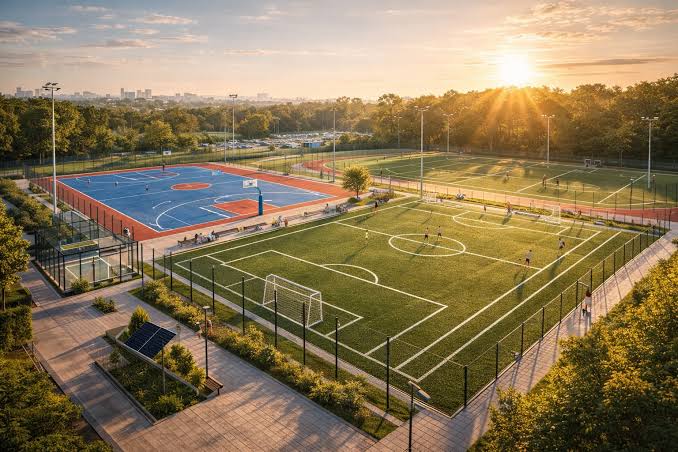
India’s sports infrastructure is entering a period of substantial development as stadiums evolve into connected, flexible, sustainable, and data-driven venues. Growing demand for immersive fan experiences, intelligent security, digital ticketing, advanced connectivity, and multipurpose facilities is influencing how new projects are planned and operated.
This transformation gives a sports infrastructure technology summit particular relevance for architects, venue operators, government bodies, technology providers, sports organizations, and investors. Meaningful industry discussions can connect emerging technologies with practical requirements involving construction, operations, safety, sustainability, monetization, and long-term asset performance.
The Changing Role of Modern Sports Venues
Sports venues are increasingly being viewed as multipurpose civic and commercial assets rather than facilities used only during matches. Stadiums can accommodate sporting events, entertainment, conferences, community activities, hospitality, retail, and other experiences, creating opportunities to increase utilization throughout the year.
India’s projected smart stadium market is estimated at $1.65 billion by 2034, while projected sports infrastructure investment is estimated at $6 billion by 2030. More than 328 sports infrastructure projects have already been sanctioned across the country, reinforcing the importance of thoughtful planning and technology integration.
Multi-Purpose Venue Design
Flexible layouts can allow stadiums to accommodate different event formats and audience requirements. Adaptable seating, hospitality areas, circulation systems, and supporting facilities can improve utilization while creating additional commercial opportunities.
Urban Integration
Modern stadiums can contribute to wider urban development when they are designed around accessibility, transportation, public spaces, and community requirements. Their role can extend beyond event days to become part of a city’s broader civic infrastructure.
Revenue Diversification
Venues can develop additional income streams through hospitality, sponsorship, retail, entertainment, premium seating, and non-sporting events. Technology can support these opportunities by improving customer engagement and operational visibility.
Long-Term Asset Planning
Infrastructure investment requires consideration of maintenance, scalability, energy consumption, technology upgrades, and changing audience expectations. Designing for future adaptability can help protect the value of a venue over its operating life.
Connectivity as the Foundation of Smart Stadiums
Reliable connectivity is essential to almost every modern stadium technology. High-capacity networks can support digital ticketing, mobile applications, connected cameras, point-of-sale systems, operational communications, media production, and high volumes of fan activity during major events.
- High-speed networks can support dense concentrations of connected devices.
- IoT sensors can provide information about venue operations and infrastructure.
- 5G can improve mobile connectivity for spectators and staff.
- Connected systems can help centralize operational information.
- Network resilience can support critical services during high-attendance events.
Intelligent Security and Crowd Management
Large sporting events require sophisticated approaches to safety, particularly when venues accommodate tens of thousands of spectators. AI-enabled surveillance, crowd intelligence, access management, and real-time monitoring can help venue teams understand movement patterns and identify potential issues more quickly.
Technology does not replace trained security personnel or established emergency procedures. Instead, intelligent systems can provide additional information that helps operators make informed decisions. Effective deployment requires careful consideration of privacy, cybersecurity, system reliability, and coordination with emergency-response teams.
AI Surveillance
AI-enabled video analytics can analyze camera feeds to identify unusual activity, crowd-density changes, or other predefined indicators. Such capabilities can help security teams prioritize attention across large areas.
Crowd Intelligence
Crowd analytics can provide insights into movement, congestion, and changing density. Venue operators can use these signals to manage entrances, exits, circulation routes, and high-traffic areas.
Biometric Access
Biometric authentication can support controlled entry and reduce friction at selected access points. Implementation requires appropriate consent, privacy safeguards, data protection, and operational controls.
Emergency Response
Connected surveillance and communication systems can support faster coordination when incidents occur. Integration with established emergency procedures can help teams share information and respond more efficiently.
Fan Experience and Digital Engagement
The spectator experience is becoming an important component of stadium investment decisions. Fans increasingly expect convenient ticketing, seamless entry, strong connectivity, digital information, personalized content, and efficient access to food, merchandise, hospitality, and other services.
Smart ticketing and contactless entry can reduce friction during arrival, while mobile platforms can provide information throughout the event. Digital systems can also create opportunities for venue operators and sports organizations to understand audience behavior and develop more relevant engagement strategies.
Sustainable Sports Infrastructure
Sustainability is becoming a central consideration in stadium design and operation. Large venues consume significant amounts of electricity and water, making resource efficiency important from both environmental and financial perspectives.
Solar microgrids, water recycling, energy-efficient systems, sustainable materials, and recognized green-building practices can contribute to more responsible venue development. These measures can also improve operational resilience when combined with appropriate infrastructure planning and monitoring.
- Solar microgrids can support on-site renewable energy generation.
- Water recycling can reduce demand for fresh water.
- Efficient lighting can lower electricity consumption.
- Intelligent building systems can optimize resource use.
- Green-building certification can provide a structured sustainability benchmark.
Technology and Investment Decisions
Technology investment needs to be evaluated alongside construction costs, operational requirements, revenue potential, and long-term maintenance. A solution that performs well technically but creates excessive complexity or recurring expenditure may not deliver sustainable value for a venue operator.
Investors and infrastructure stakeholders therefore need a broader assessment framework. Capital planning can consider expected utilization, revenue opportunities, operating expenditure, technology lifecycle, future upgrade requirements, and the ability of a facility to accommodate changing event formats.
India’s Emerging Sports Infrastructure Opportunity
India’s sports economy is creating significant demand for infrastructure capable of supporting both domestic competitions and major international sporting ambitions. The country’s aspirations around events such as the 2030 Commonwealth Games and the proposed 2036 Summer Olympics are encouraging stakeholders to examine global standards for accessibility, flexibility, sustainability, technology, and venue operations.
The wider sports ecosystem is also expanding through initiatives such as Khelo India and the network of training and sports centers across the country. This creates an opportunity to develop infrastructure that supports elite competition while also contributing to athlete development, community participation, and urban growth.
Final Thoughts
What will determine whether India’s next generation of sports venues becomes truly future-ready? Successful development will require a balanced approach to technology, investment, sustainability, safety, connectivity, fan engagement, and flexible design. The Smart Stadiums & Sports Infra Summit provides a dedicated environment for stakeholders to examine these priorities through expert discussions, exhibitions, and industry networking. For investors and decision-makers evaluating a sports infrastructure investment summit, the gathering offers an opportunity to explore emerging venue technologies, understand development priorities, connect with relevant stakeholders, and assess the infrastructure opportunities shaping India’s sports economy.