

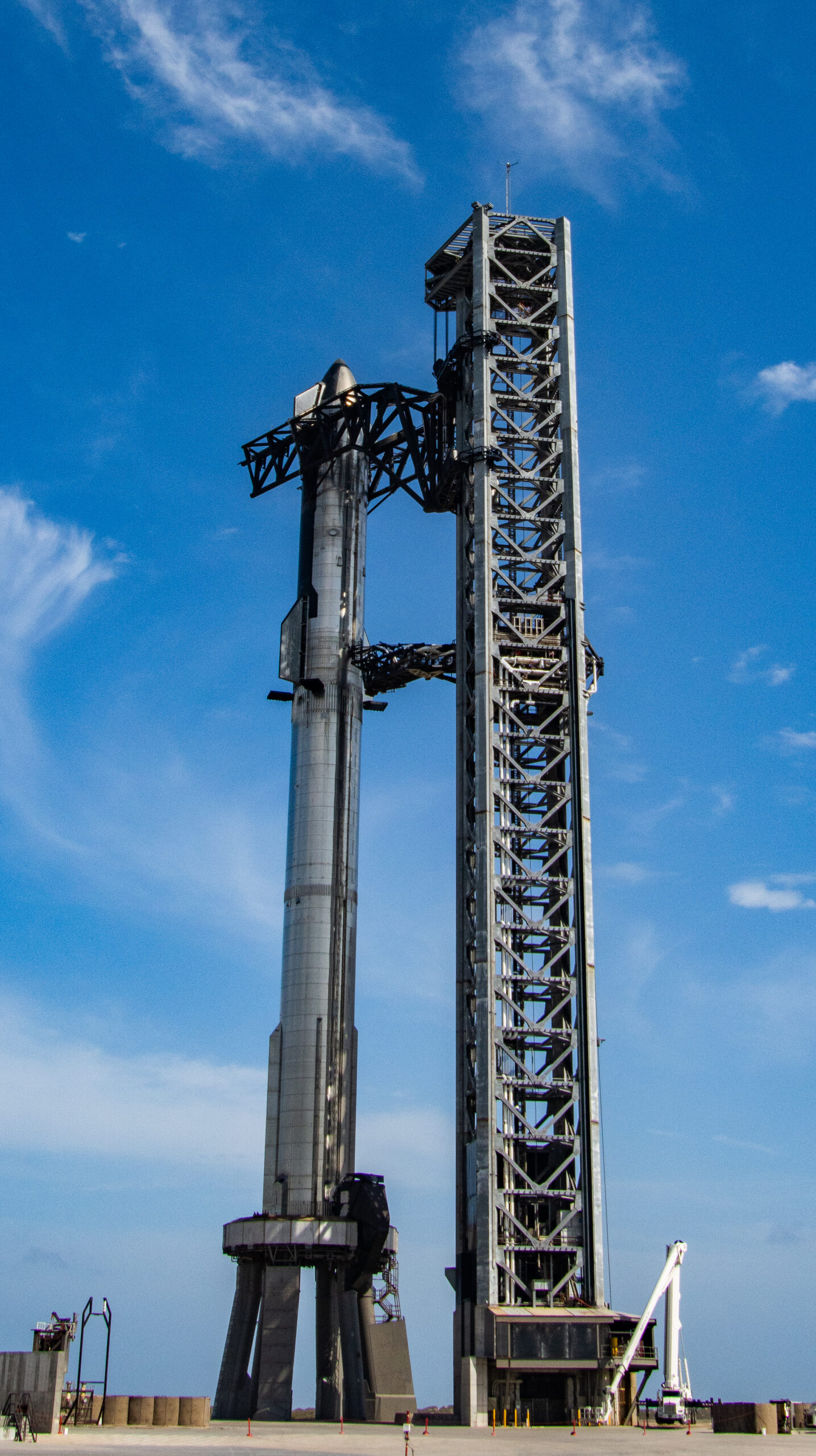
SpaceX Starship orbital flight is on the horizon, marking a significant milestone in space exploration. This upcoming event has generated considerable excitement among enthusiasts and experts alike.
What is SpaceX’s Starship?
SpaceX’s Starship is a fully reusable spacecraft designed for missions to various destinations, including the Moon and Mars. It represents a significant leap in space technology, aiming to reduce the cost of space travel and enable more frequent missions.
The vehicle consists of two main parts: the Starship itself, which is the upper stage and payload carrier, and the Super Heavy booster, which provides the initial thrust needed to escape Earth’s atmosphere. Together, they are engineered to support a variety of missions, from satellite deployment to crewed space exploration.
With the upcoming SpaceX Starship orbital flight, the company aims to showcase the capabilities of this advanced spacecraft, paving the way for future interplanetary travel and exploration.
The Importance of Orbital Flights
Orbital flights play a crucial role in advancing space exploration and technology. They serve as a testing ground for new spacecraft and systems, providing invaluable data that can improve future missions. The upcoming SpaceX Starship orbital flight represents a significant milestone in this regard, as it aims to demonstrate the vehicle’s capabilities in a real-world environment.
Successful orbital flights can lead to:
- Increased knowledge: Each mission contributes to our understanding of space travel and the challenges involved.
- Technological advancements: Innovations developed during these flights often have applications beyond space exploration.
- Inspiration for future generations: Demonstrating the possibilities of space travel can motivate young people to pursue careers in science and engineering.
As SpaceX prepares for its Starship orbital flight, the potential impact on the future of space travel is immense.
How SpaceX is Changing Space Travel
SpaceX is revolutionizing space travel with its innovative approaches and ambitious goals. The company’s latest endeavor, the SpaceX Starship orbital flight, represents a significant leap forward in aerospace technology. By developing a fully reusable spacecraft, SpaceX aims to reduce the cost of space exploration and make interplanetary travel feasible for everyone.
Key factors contributing to SpaceX’s transformative impact on the industry include:
- Reusability: The Starship is designed to be reused multiple times, drastically cutting down on expenses.
- Advanced Technology: Incorporating cutting-edge materials and engineering techniques enhances performance and safety.
- Increased Payload Capacity: The Starship can carry larger payloads to orbit, expanding the possibilities for research and commercial activities.
As the company prepares for its first orbital flight, many are eager to see how this new chapter in space travel unfolds.
What to Expect from the Upcoming Launch
As anticipation builds for the upcoming SpaceX Starship orbital flight, enthusiasts and experts alike eagerly await the potential breakthroughs this mission could bring. The launch aims to demonstrate the vehicle’s capabilities in reaching and sustaining orbit, setting a new benchmark in space travel.
Key aspects to watch during the flight include:
- Launch Sequence: The precision of the launch sequence will be crucial for success.
- Performance Metrics: Observers will be keen on speed, altitude, and fuel efficiency.
- Landing Technology: The innovative landing procedures will be tested for the first time in an orbital context.
As such, the SpaceX Starship orbital flight could very well redefine expectations for future missions, pushing the boundaries of what is possible in space exploration.
Challenges Facing SpaceX
SpaceX has made significant advancements with its Starship program, yet several challenges remain as the company prepares for its upcoming orbital flight. One of the primary concerns is ensuring the rocket’s reliability after previous test flights experienced setbacks. The intricate design of the Starship demands precision in engineering and manufacturing, which can lead to delays in the launch schedule.
Additionally, regulatory hurdles from government agencies pose another challenge. SpaceX must navigate complex safety assessments and environmental reviews before receiving final approval for the launch. These factors contribute to the uncertainty surrounding the timing of the SpaceX Starship orbital flight.
Moreover, competition from other aerospace companies adds pressure, as the race for achieving successful orbital missions intensifies.
Despite these hurdles, SpaceX remains optimistic about overcoming these obstacles and achieving its goal of a successful orbital flight.
Future of Space Exploration
The future of space exploration is poised for a significant transformation with the upcoming SpaceX Starship orbital flight. As humanity aims to explore deeper into the cosmos, advancements in technology and reusable spacecraft will play a crucial role. SpaceX’s innovations not only promise to reduce costs but also to increase the frequency of missions, making space more accessible than ever.
Experts believe that successful orbital flights could pave the way for ambitious projects, such as:
- Establishing a sustainable presence on the Moon
- Sending crewed missions to Mars
- Exploring asteroids for resources
With the eyes of the world on the upcoming launch, the implications of the SpaceX Starship orbital flight could reverberate through the annals of space history.
Expert Opinions on Starship’s Mission
As SpaceX prepares for the highly anticipated Starship orbital flight, industry experts are weighing in on the significance of this mission. Dr. Emily Carter, an aerospace engineer, believes that this launch could redefine space exploration. “If successful, the SpaceX Starship orbital flight will pave the way for missions to Mars and beyond,” she stated.
Similarly, Professor John Reynolds commented on the implications for commercial space travel. “This is not just about reaching orbit; it’s about establishing a sustainable presence in space,” he explained.
Experts agree that the success of the Starship mission could lead to increased investment in space technologies and international collaborations. “It’s a pivotal moment for the industry,” said Dr. Carter, highlighting the potential ripple effects of this groundbreaking flight.
By Jenny Hautmann via Openverse
Read the original
The New York Times · SpaceX Starship orbital flight tests
Related reading
Stronger AI Rules: Clear Guidelines for Safety Concerns · Deep-tech VC fund: Smart investment opportunity for alumni · OPPO Find X10: The Best Global Variant with Proven Specs